
Industrial architecture: what if we stopped building simple boxes?
For decades, industrial buildings have been viewed as a necessary evil — a mere tool for production, an enclosure intended to protect machinery, store goods, or house economic activity. The aim was clear: to build as quickly as possible, at the lowest cost, with minimal materials and investment.
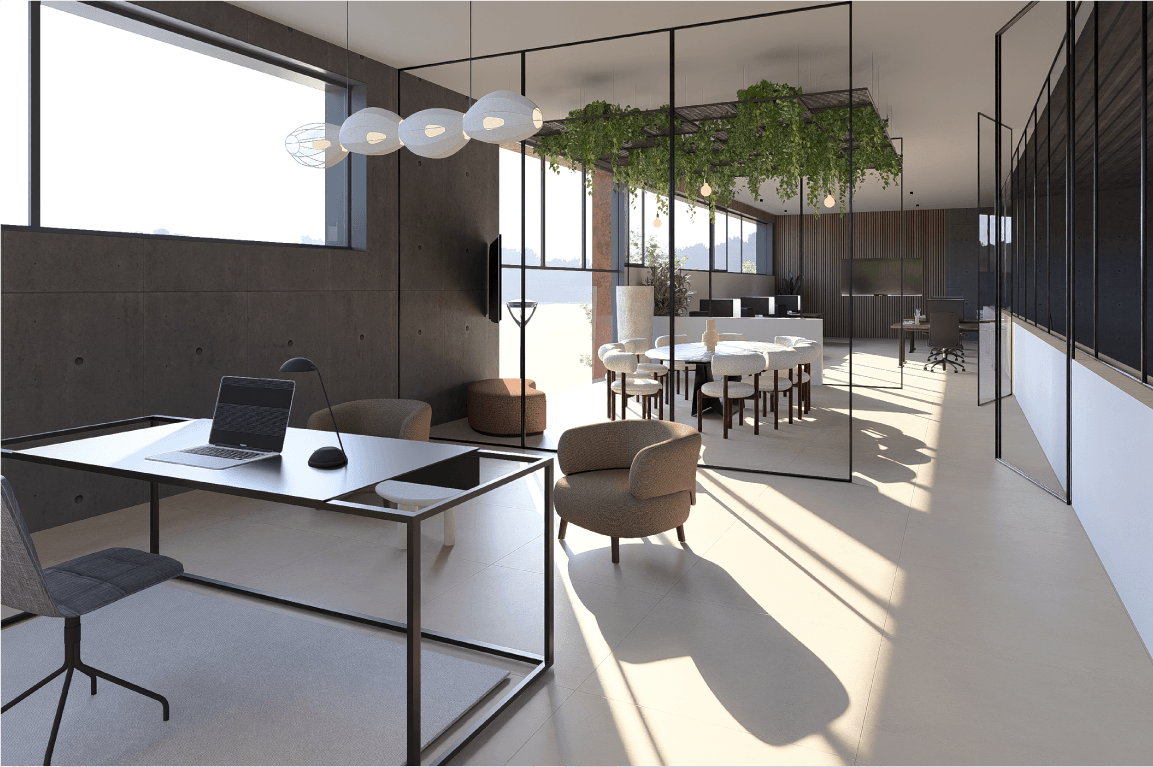
This vision unfortunately still exists today, in parts of the French and European industrial landscape. How many business parks feature uniform buildings, lacking character or identity, without any architectural consideration? Monotonous facades, workspaces deprived of natural light, soulless offices, and warehouses where artificial lighting remains on from morning to night. Yet, a simple question deserves to be asked: why do we dedicate so much energy to making our homes pleasant to live in, and so little to improving the places where we sometimes spend even more time?
The workplace, a true place to live
An employee often spends more than 1,600 hours a year in their professional environment – and far more for many managers, technicians, or executives. When we build a home, we consider the orientation of rooms, natural light, the quality of materials, the views to the outside, thermal comfort, and the general atmosphere of spaces. We instinctively know that these elements influence our daily well-being. Why should they be any less important in an industrial building? A colleague working in a bright, pleasant, and well-designed environment is generally more motivated, more engaged, and performs better. Beyond economic results, they benefit from a better quality of working life. Companies that understand this often notice a calmer social climate, a reduction in absenteeism, and better talent retention. Industrial architecture should therefore no longer be conceived solely in terms of square metres, but also as a tool serving the men and women who occupy these spaces.
Natural light: an often underestimated investment
One of the most striking examples concerns lighting. In many warehouses built a few years ago, openings are reduced to the bare minimum: a few roof domes, a few translucent strips that are barely sufficient to illuminate the space. As a result, the lights have to be switched on from the start of the day. This situation is often considered normal, whereas it represents a permanent energy cost and limited working comfort.
Conversely, a building designed from the outset to capture natural light radically transforms the experience of its users. Large skylights, saw-tooth roofs, intelligently placed light wells, or glazed facades create spaces bathed in light for most of the day. The initial investment is certainly slightly higher, but the benefits accumulate over decades: energy savings become significant and occupants enjoy a much more pleasant environment. Natural light improves concentration, reduces visual fatigue, and contributes to the well-being of teams – undoubtedly one of the most profitable investments a client can make.
Designing buildings for people, not just for activities
For a long time, the industry prioritised pure efficiency: the building primarily had to meet technical specifications. Today, companies expect more. They want to attract qualified employees in an increasingly difficult recruitment market, welcome their clients in impressive premises, and they understand that their building plays a full part in their brand image. A modern head office, a well-designed warehouse, or offices harmoniously integrated into their surroundings are becoming genuine communication tools. When a client visits a company, they immediately form an opinion based on the premises they discover: a well-maintained building conveys an image of professionalism, seriousness, and longevity, whereas a dated or characterless building can, unconsciously, weaken this perception.
Water, vegetation and outdoor spaces: unexpected allies
Modern industrial architecture is no longer confined to walls and roofs; outdoor spaces now play a vital role in the overall quality of a project. The integration of a water feature around offices, for example, brings a particularly appreciated calming dimension: the reflection of the water, the presence of vegetation, and an opening onto a pleasant landscape help to reduce daily stress. These amenities also offer very concrete advantages. A landscaped pond can contribute to rainwater management, provide natural protection against certain intrusions, improve the building's integration into its environment, and greatly enhance the value of the entire site. Companies that invest in the quality of their outdoor spaces often find that they become a strong element of their identity.
An architecture that creates an identity
For decades, industrial buildings all looked the same. Today, the possibilities are almost endless. Advances in facade materials, architectural panels, textured concrete, metal cladding, and insulation systems make it possible to create unique buildings, where colours, volumes, play of light and contrasts offer every company the opportunity to express its personality.
https://www.atipofoundry.comAs with fashion or the automotive industry, trends evolve, and industrial buildings are now following this movement. A building can become a strong element of a brand's communication: successful architecture allows for differentiation, enhances recognition and creates a true visual signature.
More responsible materials for future generations
Some still consider architecture a cost. However, the most successful projects demonstrate that it is most often an investment. A better-insulated building sustainably reduces energy consumption; intelligent lighting design lowers operating costs; attractive architecture enhances rental appeal and increases the property's asset value. Over several decades, the savings achieved and the asset appreciation far exceed the initial additional cost. This total cost logic is gradually becoming the norm among the most experienced investors. They no longer just consider construction cost per square metre, but analyse the building's lifespan, maintenance costs, energy performance, user comfort, and the future value of their investment.
Invest more today to gain tomorrow
The evolution of industrial architecture is finally accompanied by environmental considerations. Material choices are no longer dictated solely by immediate cost: clients are now interested in their carbon footprint, their recyclability, their origin, and their contribution to indoor comfort. The use of sustainable materials, local supply chains, high-performance insulation, and environmentally friendly construction solutions is becoming a major decision-making criterion. Beyond regulations, this approach meets a growing demand from businesses, employees, and investors.
A new vision for the industrial building
The right question is no longer how to build the cheapest possible building, but how to create a building capable of providing value for fifty years – economic value, of course, but also human, environmental, and heritage value. Tomorrow's industrial buildings will no longer be mere boxes intended to house an activity: they will become living spaces, high-performance work tools, shop windows for companies, and structuring elements of the landscape. This evolution is already underway. Across Europe, new projects demonstrate that it is possible to reconcile economic performance, architectural quality, user well-being, and environmental responsibility. It is precisely this conviction that guides the projects we design at PSI: buildings designed from the outset for light, comfort, and durability, because a successful workplace is first and foremost a place designed for those who occupy it. Industry no longer has to hide behind anonymous façades; it can now express itself through ambitious, sustainable, and inspiring architecture. And what if, tomorrow, the most beautiful building in a business park were no longer an office building, but an industrial building designed first and foremost for the people who work in it?